
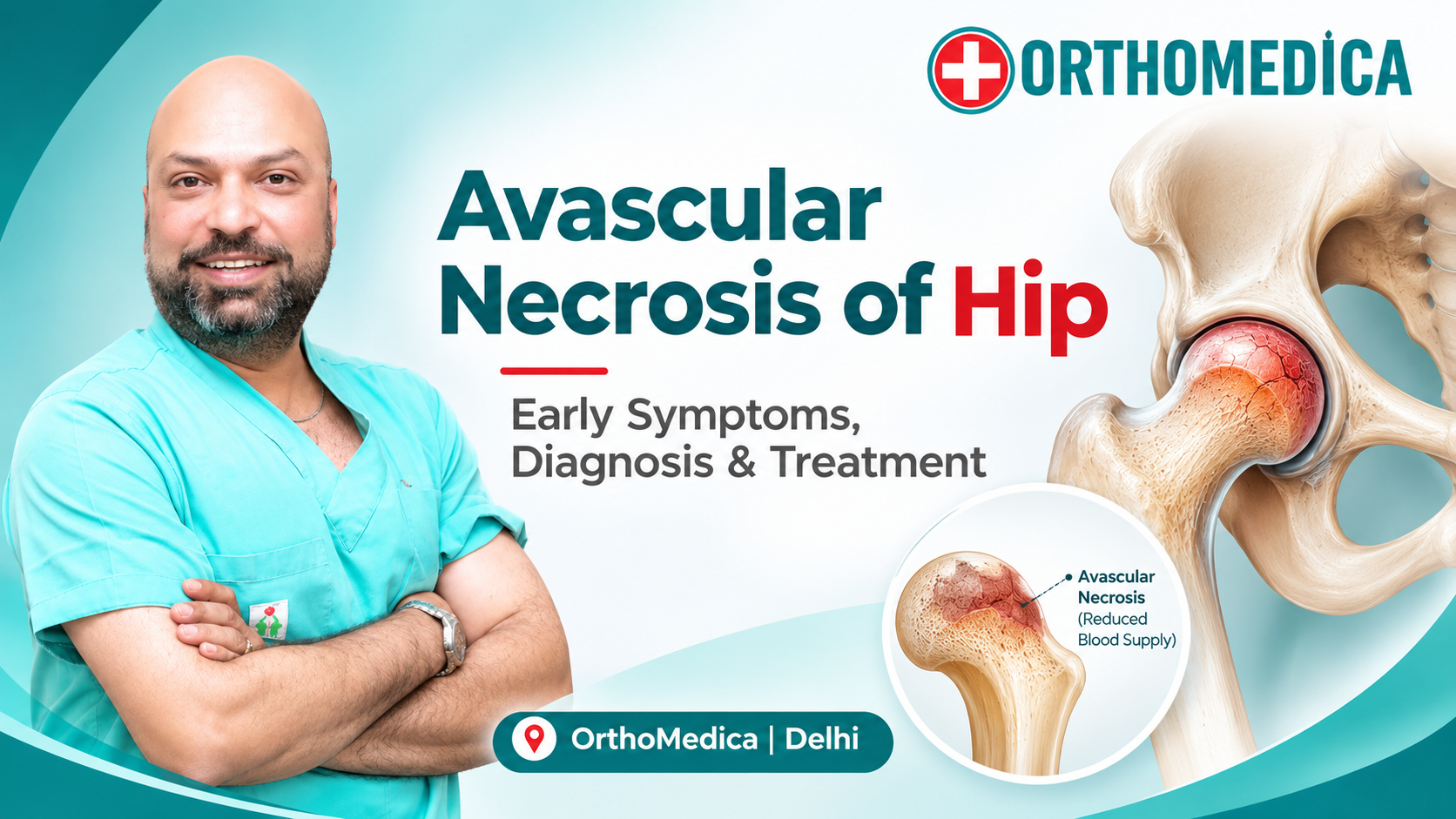
Avascular Necrosis of Hip in Delhi: Early Symptoms, Diagnosis and Treatment Options
Hip pain is not always caused by arthritis or a muscle strain. Sometimes, persistent discomfort in the hip or groin can indicate a condition called avascular necrosis (AVN). This condition affects the blood supply to the bone and can gradually damage the hip joint.
People searching for an avascular necrosis specialist in Delhi often want to understand why hip pain develops, which tests can identify the problem and what treatment options are available.
Early medical evaluation is important because treatment depends on the stage of the condition. An orthopedic specialist can assess the hip joint and explain suitable treatment options based on the patient’s symptoms and imaging reports.
At OrthoMedica, Dr. Abhishek Kumar Mishra provides orthopedic consultation for hip and joint conditions, including hip replacement and joint-related problems.
What Is Avascular Necrosis of the Hip?
Avascular necrosis, also known as osteonecrosis, occurs when the blood supply to a part of the bone becomes reduced or interrupted.
The condition commonly affects the femoral head, which is the ball-shaped upper end of the thigh bone. This part of the bone fits into the hip socket and helps the joint move smoothly.
When the bone does not receive enough blood, its tissue may gradually weaken. Over time, the femoral head can lose its normal shape or collapse. This damage can also lead to secondary arthritis.
AVN may affect adults in different age groups. However, it is particularly important to investigate persistent hip or groin pain in younger and middle-aged adults.
What Causes Avascular Necrosis of the Hip?
Several factors can affect blood flow to the femoral head. In some patients, doctors may not identify one clear cause.
Common risk factors include:
1. Long-Term Corticosteroid Use
Long-term or high-dose corticosteroid treatment can increase the risk of AVN in some patients. However, patients should never stop prescribed steroids without medical advice.
2. Excessive Alcohol Consumption
Heavy alcohol consumption can affect bone health and increase the risk of osteonecrosis.
3. Previous Hip Injury
A serious hip fracture or dislocation can damage the blood vessels that supply the femoral head. Consequently, the affected bone may develop AVN.
4. Certain Medical Conditions
Conditions such as sickle cell disease and some blood-related disorders can affect blood circulation to the bone.
5. Other Possible Causes
Some patients develop AVN without an obvious risk factor. Therefore, a doctor must review the patient’s medical history rather than assume the cause.
Early Symptoms of Hip AVN You Should Not Ignore
AVN may not cause noticeable symptoms during its earliest stage. As the condition progresses, however, patients may experience increasing discomfort.
Look out for these symptoms:
- Deep pain in the groin or hip region
- Pain that spreads towards the thigh or knee
- Discomfort while walking or standing
- Difficulty climbing stairs
- Pain while bending, squatting or sitting
- Reduced hip movement and stiffness
- Limping or difficulty putting weight on the affected leg
Initially, pain may occur only during physical activity. Later, some patients may also experience discomfort while resting.
However, these symptoms do not confirm AVN. Other hip conditions can produce similar problems. A proper orthopedic assessment is necessary to identify the cause.
How Is Avascular Necrosis Diagnosed?
An accurate diagnosis helps the orthopedic surgeon understand the extent of bone damage and select an appropriate treatment plan.
The evaluation generally involves the following steps.
Medical History and Physical Examination
First, the doctor asks about the location and duration of pain. The doctor may also review previous injuries, steroid use, medical conditions and alcohol consumption.
Next, the specialist checks hip movement, tenderness, walking pattern and joint function.
X-Ray Examination
X-rays help assess the shape of the femoral head and identify changes in the bone. They are useful for detecting established bone damage.
However, an early AVN condition may not appear clearly on an X-ray.
MRI Scan
MRI can help identify early changes in the bone before an X-ray shows obvious damage. Therefore, the doctor may recommend an MRI when symptoms suggest AVN but initial X-ray findings are inconclusive.
The doctor selects imaging tests according to the clinical examination and individual requirements.
What Are the Treatment Options for Avascular Necrosis?
AVN treatment depends on several factors, including the stage of the disease, size of the affected area, bone condition, age and activity level.
Importantly, not every patient needs hip replacement surgery.
1. Non-Surgical Treatment
In selected early cases, the orthopedic specialist may recommend non-surgical management.
This may include:
- Activity modification
- Reducing pressure on the affected hip
- Walking aids when required
- Physiotherapy under professional guidance
- Appropriate pain management
- Regular clinical and imaging follow-up
These measures can help manage symptoms and improve function. However, they do not guarantee that AVN will stop progressing.
2. Joint-Preserving Procedures
Some patients may qualify for procedures that aim to preserve the natural hip joint.
For example, core decompression may be considered in selected patients before the femoral head collapses. The surgeon creates channels in the affected bone to reduce pressure and encourage healing responses.
The suitability of this procedure depends on the location and extent of bone damage.
3. Hip Replacement Surgery
When AVN causes significant damage or collapse of the femoral head, hip replacement may become an appropriate treatment option.
During total hip replacement, the surgeon replaces the damaged joint surfaces with artificial components.
The decision depends on the patient’s symptoms, imaging findings, age, activity level and overall health.
Learn more about hip replacement and joint replacement treatment at OrthoMedica.
Can Avascular Necrosis Be Prevented?
Not every case of AVN can be prevented. However, certain steps may help reduce avoidable risk factors.
Consider the following measures:
- Follow your doctor’s instructions when using corticosteroid medication.
- Avoid excessive alcohol consumption.
- Seek medical attention after a serious hip injury.
- Manage existing medical conditions with professional guidance.
- Do not ignore persistent hip or groin pain.
- Attend recommended follow-up appointments.
If you have a medical condition associated with AVN, discuss your individual risk with your treating doctor.
Why Consult an Orthopedic Specialist at OrthoMedica?
Choosing an orthopedic specialist requires attention to qualifications, clinical experience and relevant treatment expertise.
Dr. Abhishek Kumar Mishra is listed on the OrthoMedica website as an orthopedic and joint replacement surgeon. His qualifications include MBBS from Maulana Azad Medical College, MS in Orthopaedics and M.Ch. in Orthopaedics.
His listed areas of practice include hip and knee replacement, spine surgery, arthroscopy, arthritis management and fracture care.
You can learn more about Dr. Abhishek Kumar Mishra’s qualifications and orthopedic experience.
Orthopedic Consultation for Hip Problems in South Delhi
OrthoMedica provides orthopedic consultation at its Hauz Khas clinic in South Delhi.
Patients experiencing persistent hip pain, restricted movement or other joint problems can enquire about an appointment.
Clinic: OrthoMedica
Address: D-40, near E Block Market, Hauz Khas, New Delhi, Delhi 110016
Appointment Contact: +91 99994 81645
Visit the OrthoMedica contact page for appointment enquiries.
Frequently Asked Questions
1. What is the first sign of avascular necrosis of the hip?
Some patients initially experience deep pain in the groin or hip region, particularly while walking or putting weight on the affected leg. However, early AVN may not cause noticeable symptoms.
2. Can avascular necrosis occur in young adults?
Yes. AVN can affect younger and middle-aged adults. Previous injuries, certain medical conditions and corticosteroid exposure may increase the risk.
3. Can an X-ray detect early-stage AVN?
An X-ray can identify established bone changes. However, early AVN may not appear clearly. An MRI may help detect changes at an earlier stage.
4. Is hip replacement necessary for every AVN patient?
No. Treatment depends on the stage of AVN and the condition of the femoral head. Selected early cases may qualify for non-surgical management or joint-preserving procedures.
5. Does AVN always cause complete hip joint damage?
No. The progression varies between patients. Early diagnosis and appropriate treatment planning may help preserve joint function in selected cases.
6. Which doctor treats avascular necrosis of the hip in Delhi?
An orthopedic surgeon with experience in hip and joint conditions can evaluate AVN. The specialist may recommend imaging, non-surgical management or surgery according to the condition.
Medical Disclaimer: This article provides general educational information. It does not replace a medical consultation, diagnosis or treatment. Patients should consult a qualified orthopedic specialist for individual advice.
One Response